



RFID and electronic shelf labels are often discussed as part of the same smart retail category. Inside a store, however, they deal with different types of information.
RFID tracks physical items as they move through receiving areas, stockrooms, sales floors, and checkout points. Electronic shelf labels manage the prices and other information displayed at fixed shelf locations.
Neither technology can replace the other. A retailer struggling with unreliable inventory data will not solve that problem by installing digital price tags. Likewise, RFID tags cannot keep shelf prices synchronized with the point-of-sale system.
A useful comparison should therefore start with the store operation that needs improvement.
The Operational Difference Between RFID and ESLs
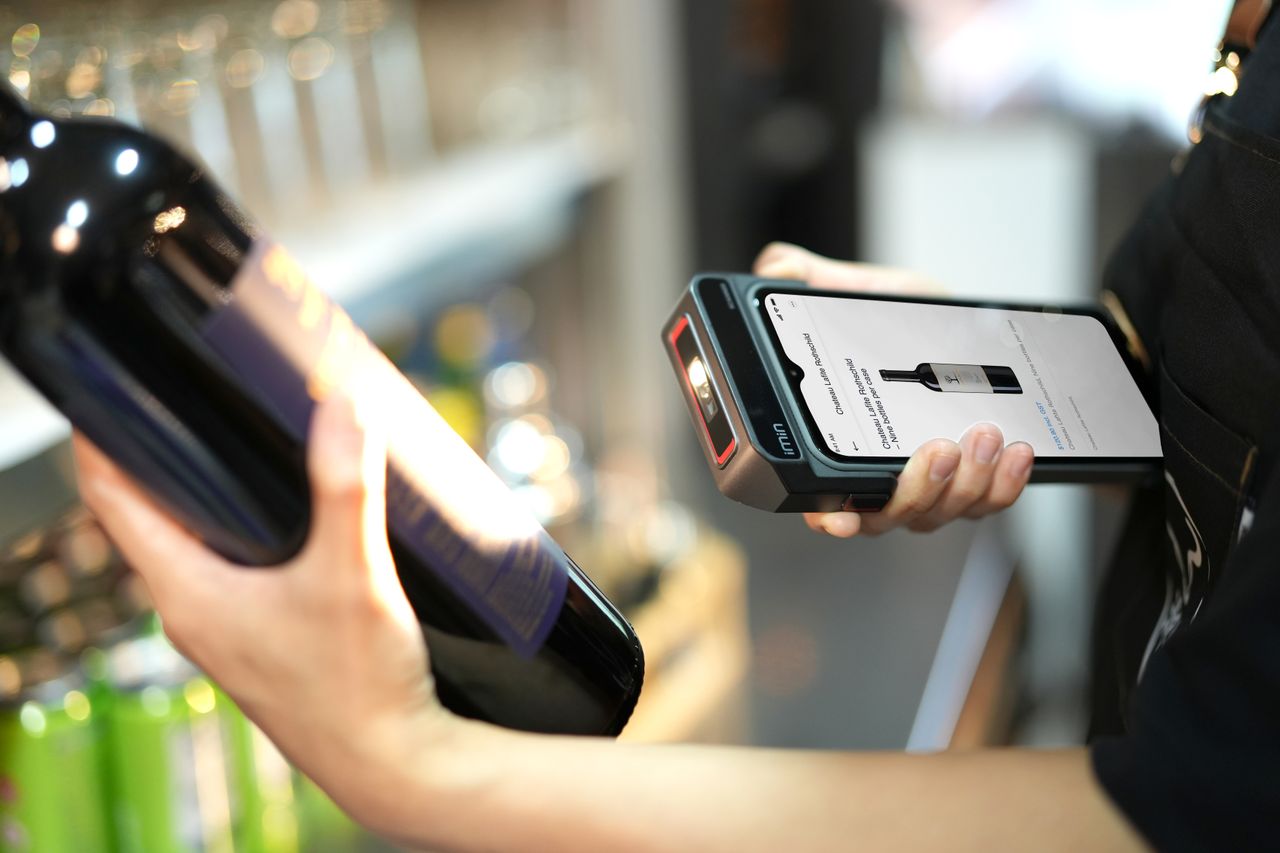
An RFID system uses tags and readers to identify objects through radio waves. Passive UHF, also known as RAIN RFID, is commonly used for item-level inventory in retail. Readers can capture multiple tags without direct line of sight, although performance depends on tag placement, product materials, reader configuration, and the surrounding environment.
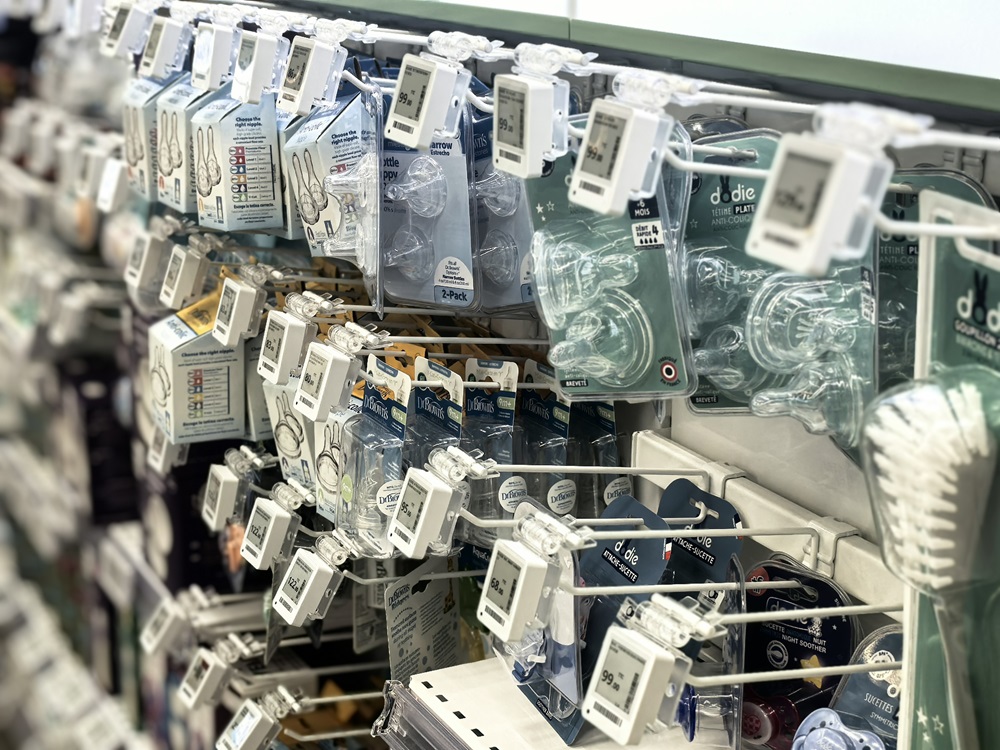
An electronic shelf label is a battery-powered display assigned to a particular product or shelf position. It receives information from a central platform and can show prices, promotions, product details, QR codes, or instructions for store employees. A typical electronic shelf label system connects with product, pricing, POS, or ERP data.
| Store operation | RFID | Electronic shelf labels |
|---|---|---|
| Primary object | RFID identifies an item, case, or asset. | An ESL represents a shelf location or assigned SKU. |
| Main output | The system records inventory and movement events. | The display presents centrally managed information. |
| Typical hardware | The system uses tags, antennas, handheld devices, or fixed readers. | The system uses digital displays, gateways, rails, and mounting accessories. |
| Common applications | Retailers use RFID for receiving, inventory counting, item search, and loss analysis. | Retailers use ESLs for pricing, promotions, picking guidance, and replenishment tasks. |
| Main limitation | RFID does not present prices or offers to shoppers. | ESLs do not independently detect the physical quantity on a shelf. |
An ESL may display an inventory figure supplied by another system, but the label itself cannot verify whether the figure is accurate. RFID can record that an item was read at a particular point, but it does not communicate product information to a shopper.
RFID Applications in Retail Inventory Management
RFID is suited to operations that require item-level inventory visibility. A unique Electronic Product Code can distinguish individual units that share the same SKU. The GS1 Tag Data Standard defines how EPC data is encoded on RAIN RFID tags.
Retailers commonly apply RFID to the following tasks:
1. Receiving teams can read multiple tagged products at a dock or transfer point without scanning every barcode separately.
2. Store employees can complete cycle counts more quickly and repeat them more often across sales-floor and backroom inventory.
3. Omnichannel systems can use more accurate item-level data to reduce orders for products that cannot be found in the store.
4. Employees can use a handheld RFID reader to narrow the search area for misplaced merchandise.
5. Loss-prevention teams can compare RFID events with transaction and transfer records to investigate inventory discrepancies.
These applications are particularly relevant to apparel and footwear retailers, where stores carry many sizes, colors, and product variants.
Practical Limits of RFID Deployment
RFID does not automatically provide precise, continuous location data. A handheld cycle count, a fixed reader at a doorway, and a real-time location system collect different information. Retailers need to decide which events matter before choosing the reader setup.
Product materials also affect performance. Liquids and metal can interfere with UHF signals, although tags designed for difficult surfaces may reduce these problems.
The tagging process needs attention as well. Applying and encoding RFID tags during manufacturing or distribution is usually easier to scale than asking store employees to tag individual products after delivery.
Electronic Shelf Labels in Daily Store Operations
Electronic shelf labels are used when centrally managed information must appear at a specific physical location. Their role begins after a pricing, promotion, picking, or replenishment decision has already been made in another system.
Common applications include:
1. Stores can update shelf prices and promotional information from the same data used by the POS system.
2. Retail teams can schedule markdowns for clearance products or goods approaching expiry, subject to the retailer's approval rules.
3. Labels can display unit prices, loyalty offers, origin information, allergens, ratings, or QR codes when the screen size allows it.
4. An ESL's LED can guide an employee to the correct location during order picking. MinewTag explains this process in its guide to ESL-supported pick-to-light workflows.
5. A task system can activate a label or display a message when inventory data indicates that a shelf needs replenishment.
The MinewTag electronic shelf label range shows the display formats available for different shelf types, while its smart retail solution outlines the wider system architecture.
Practical Limits of ESL Deployment
A successful ESL installation depends on more than display quality. The retailer needs accurate product data, reliable SKU-to-label pairing, suitable fixtures, wireless coverage, and confirmation that each update reached the intended label.
The operating plan should also cover damaged devices, battery replacement, store layout changes, connectivity interruptions, and incorrectly paired labels. These exceptions become important when thousands of ESLs are installed across several stores.
Hardware prices alone do not represent the full project cost. Gateways, mounting accessories, software integration, installation, employee training, and ongoing support should all be included in an electronic shelf label cost analysis.
Combined RFID and ESL Workflows
Some store processes need both accurate item data and a visible instruction at the shelf. Replenishment is one example.
An RFID read or inventory transaction may show that stock is available in the backroom. Sales, inventory, or shelf-monitoring data then identifies a shortage at the selling location. The task system assigns the replenishment work and activates the relevant ESL LED. An employee follows the signal, moves the product, and confirms that the task is complete.
RFID provides evidence about the merchandise, while the ESL helps the employee act at the correct location. A similar combination can support click-and-collect orders: RFID data reduces false availability, and ESL LEDs shorten the time spent finding shelf positions.
Retailers still need a defined system of record. Product, pricing, inventory, planogram, and task data should not be maintained separately in several platforms. The integration design must specify which system creates each event, where records are updated, and how conflicting data is handled.
Choosing the Right Technology for Each Store Task
The choice should follow the operational problem.
RFID is the stronger starting point when the main issues are inaccurate inventory, slow cycle counts, inefficient receiving, missing products, or unreliable online availability.
Electronic shelf labels are more appropriate when stores face frequent price changes, shelf-to-POS discrepancies, delayed promotional execution, slow markdowns, or excessive time spent finding shelf positions.
A combined deployment makes sense when poor inventory data creates unreliable tasks and employees also need guidance across a large number of shelf locations.
The business case will vary by retail format. Item-level RFID is generally easier to justify for products with enough unit value and inventory complexity. ESLs are often well suited to grocery, pharmacy, and consumer electronics stores with many shelf positions and frequent information changes. Labor requirements, device count, transaction volume, integration work, and support costs all affect the final calculation.
Testing RFID and ESLs in a Store Pilot
A pilot should test the complete workflow under normal operating conditions. It should include representative products, difficult fixtures, peak trading periods, network interruptions, and employees who will use the system during regular shifts.
For RFID, retailers can measure read rates, inventory accuracy, count time, receiving time, and false online availability. An ESL pilot can track update success, shelf-price discrepancies, completion time for price changes, picking time, and incorrectly paired labels.
Support effort and exception volume also need to be recorded. A missed RFID read, failed ESL update, planogram change, or network outage may reveal more about the proposed operation than a successful hardware demonstration.
Final Assessment
RFID and electronic shelf labels manage different parts of store operations. RFID records the identity and movement of merchandise. ESLs present controlled information and staff instructions at fixed shelf locations.
Retailers should choose the technology that addresses the most costly information gap first. The second technology becomes relevant when the same workflow requires both reliable item data and faster shelf-level execution.
If you are planning a pricing automation, pick-to-light, or store digitalization project, contact MinewTag to discuss your store format, integration requirements, and pilot scope.


