



E-ink and LCD displays are often grouped together as “digital shelf labels”, but they solve different problems in a store.
For a supermarket changing thousands of prices each week, the priority is dependable pricing, long battery life, and a label that remains easy to read all day. For a promotional bay selling premium electronics or wine, the shelf may need images, product comparisons, and campaign content that catches a shopper's attention. Using the same display type for both jobs can add unnecessary cost or leave merchandising teams with limited options.
The starting point should be the task at the shelf edge: Is the display there to keep product information accurate, or does it also need to sell the product?
E-Ink for Daily Shelf Operations
E-ink electronic labels are designed for information that stays on screen for long periods. They use ambient light, much like printed paper, and consume very little power once the display has updated. This is why they are widely used in supermarkets, pharmacies, convenience stores, and large-format retail environments.
A typical E-ink label shows the product name, retail price, unit price, barcode, promotion details, and a few operational symbols. The information needs to be correct and clear, but it does not need to animate or change every few minutes.
This makes E-ink a practical choice for large-scale deployment. A retailer can install thousands of battery-powered labels without adding power cables along every shelf. Store teams can update prices centrally instead of replacing paper tickets by hand, while the labels continue to display information when the store network is quiet or a price update is not in progress.
Readability is another advantage. Reflective displays usually perform well under bright store lighting and near windows. That matters in grocery stores, pharmacies, and entrance areas, where glare can make some backlit screens difficult to read.
E-ink is not ideal for everything. Refreshing the screen takes longer than on an LCD display, and the technology is not intended for video, smooth transitions, or fast-moving promotional content. Accent colours such as red or yellow can make a promotion or markdown stand out, but the display cannot deliver the visual impact of a full-colour digital screen.
E-ink is usually the right fit when a retailer needs to:
1. Keep shelf prices and unit prices accurate across thousands of SKUs with centralized updates.
2. Manage promotions, markdowns, and member pricing changes without manual label replacement.
3. Display product information, barcodes, pricing details, and operational indicators directly at the shelf edge.
4. Run electronic shelf labels for years with ultra-low power consumption between updates.
5. Install ESLs in locations where traditional power cabling would be difficult or expensive.
6. Maintain reliable shelf information management across supermarkets, pharmacies, convenience stores, and other retail environments.
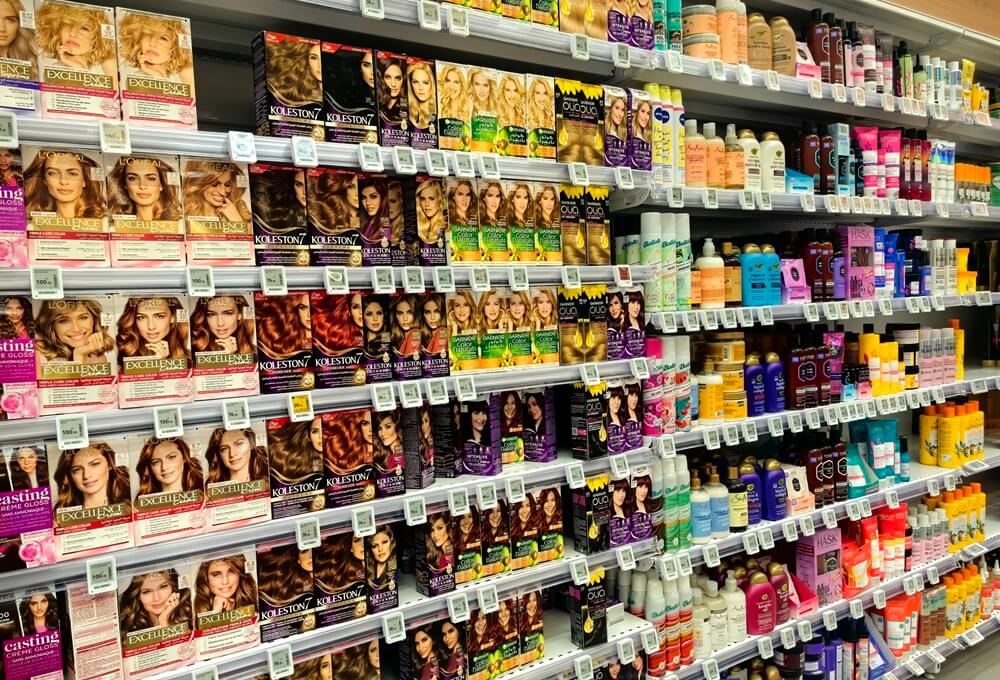
LCD for Merchandising and Product Explanation
LCD shelf edge displays need more power, but they can show richer content. Full colour, product images, moving graphics, and video give LCD a different role in the store.
An LCD display can explain why a product deserves attention. A consumer electronics retailer might show a short feature comparison beside headphones, cameras, or smart-home devices. A wine shop could use a larger display for tasting notes, country of origin, food-pairing suggestions, or a seasonal offer. In a cosmetics section, a screen might support a new-product campaign with imagery that a standard shelf label cannot show.
These uses are most effective when the display has a clear commercial purpose. Putting LCD screens across every shelf can be expensive and visually overwhelming. They work better in featured bays, endcaps, display tables, service counters, and categories where shoppers spend time comparing products.
LCD can also support content that changes throughout the day. A retailer may run different offers in the morning and evening, promote an event, or show a QR code linked to a product demonstration or loyalty offer. This flexibility comes with a content-management requirement. Someone needs to create the assets, check product information, schedule campaigns, and remove outdated content when the promotion ends.
That workload is easy to underestimate. A pricing team can usually manage E-ink labels through the same product and price data used by the POS or ERP system. LCD displays often need support from merchandising or marketing teams as well. If that process is not defined before deployment, screens may end up showing old campaigns or generic content that shoppers ignore.
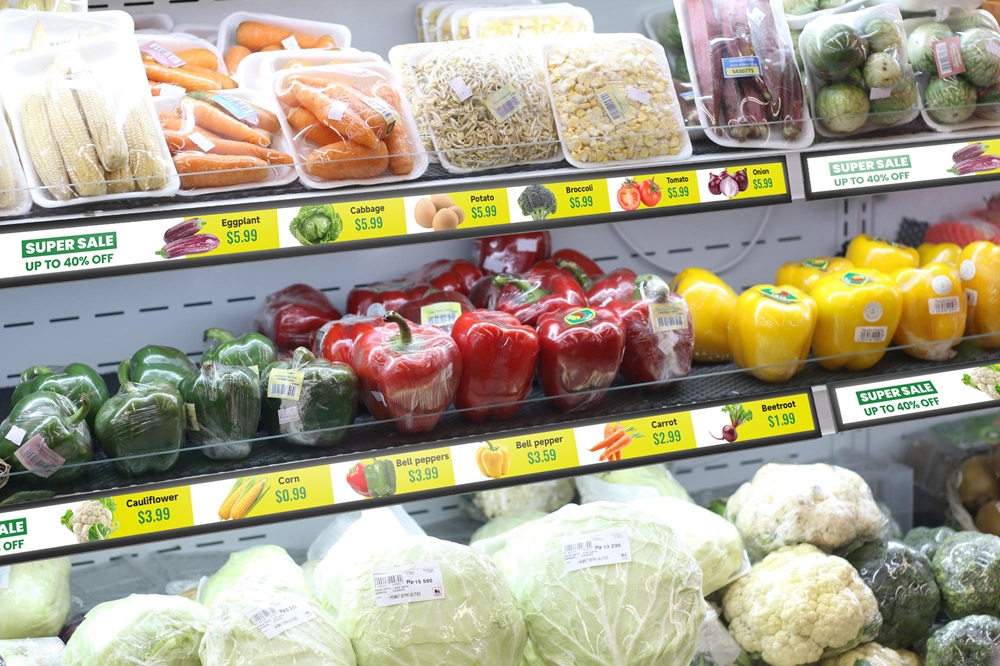
Key Differences at the Shelf Edge
| Consideration | E-Ink Shelf Labels | LCD Shelf Edge Displays |
|---|---|---|
| Main role | Price and product information | Visual merchandising and product communication |
| Content | Text, barcodes, icons, limited accent colours | Full-colour images, graphics, video, and QR codes |
| Power use | Very low between updates | Requires continuous or frequent power |
| Refresh speed | Better for scheduled or periodic updates | Better for frequent changes and moving content |
| Best deployment scale | Standard shelves across an entire store | Selected locations with higher merchandising value |
| Bright-light readability | Usually strong under ambient light | Depends on screen brightness, glare, and viewing angle |
| Content workload | Mainly product-data and price management | Requires campaign assets and display scheduling |
The table makes the distinction look simple, but the decision often comes down to the store layout and the category involved.
A grocery retailer with 20,000 shelf positions normally needs E-ink labels across the sales floor. The business case depends on pricing accuracy, lower manual workload, and reliable updates across a large product range. There is little value in adding full-colour screens to every cereal, beverage, or household-goods shelf.
A retailer selling high-consideration products may see value in LCD at specific points. Shoppers buying televisions, skincare products, wine, or premium appliances often need more context before they buy. An LCD display can support the selling process when the information is relevant and the screen is placed where customers are already comparing options.
Power and Maintenance Need Early Planning
Power is one of the largest practical differences between the two technologies.
E-ink labels are usually battery-powered and can remain in place for years, depending on the device, update frequency, and operating conditions. That makes them easier to deploy along long shelf runs and in stores where running new wiring would disrupt operations.
LCD displays require a more deliberate power plan. Depending on the hardware and setup, retailers may need wired power, charging arrangements, or access to power at display fixtures. The cost is not limited to the screen itself. Installation, maintenance, and future changes to the fixture layout should all be considered before selecting LCD for a large area.
Store conditions also matter. Refrigerated zones, fresh-food counters, narrow aisles, strong overhead lighting, and frequent fixture changes can affect which option is practical. A display that works well at an endcap may not suit every standard shelf.
A Mixed Setup Often Works Best
Many stores do not need to choose one technology for every location.
E-ink can handle the core job of digital shelf labeling: accurate prices, product information, promotions, and operational updates across the store. LCD can be reserved for areas where visual content helps shoppers understand a product or notice a campaign.
This approach keeps the main labeling system manageable while giving merchandising teams room to use richer displays where they can make a difference. The retailer does not have to turn every shelf edge into a screen. It can use each technology for the work it handles best.
E-ink is suited to stable, large-scale shelf information. LCD is suited to selected areas where the shelf needs to communicate more than a price.


